
A written scope that matches your space
We define exactly what is included by area—restrooms, break rooms, open office, entrances, and elevator lobbies—plus frequencies for tasks that should not be done every visit.
Serving Los Angeles, California & surrounding areas
Mon–Fri 8am–6pm · Sat 9am–2pm
Janitorial service · Los Angeles, CA
Keep your facility consistently clean with a written scope, steady scheduling, and a team that responds quickly when something needs attention.
Commercial janitorial care
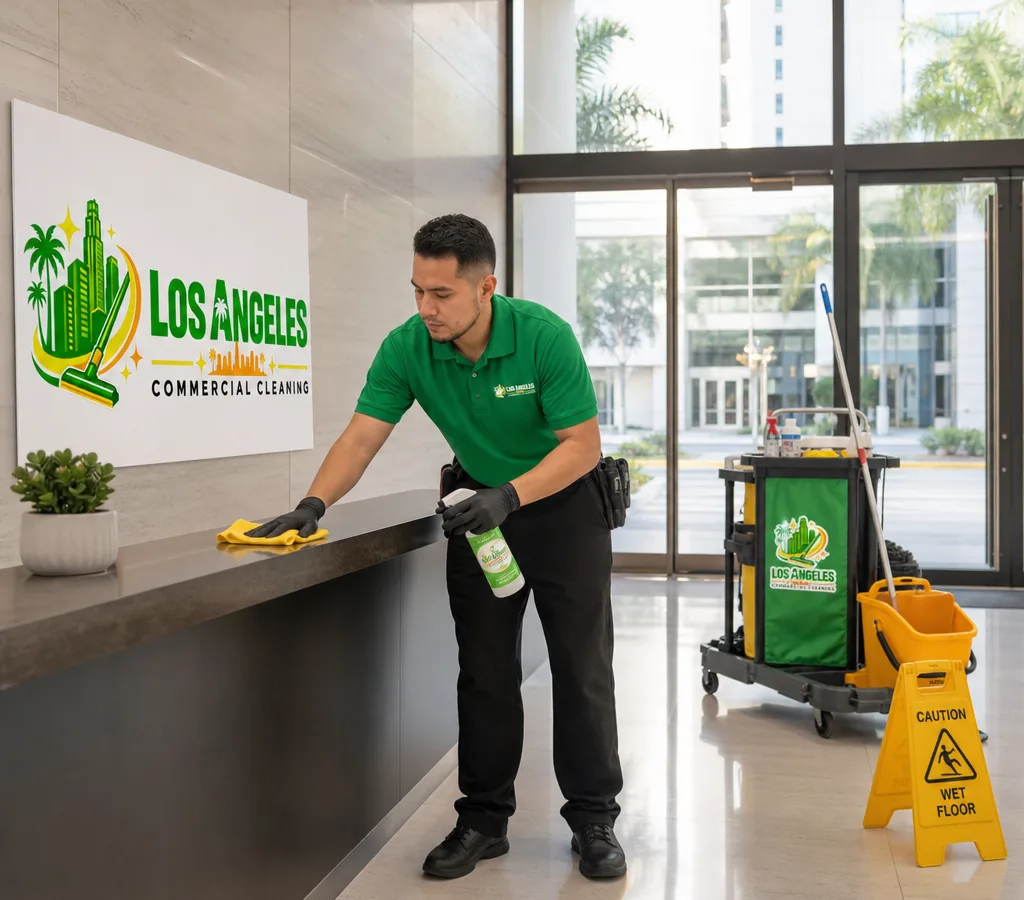
When you hire a janitorial service in Los Angeles CA, you are really hiring consistency: the same areas handled the same way, on the schedule you expect, with clear communication when something changes. Los Angeles Commercial Cleaning provides recurring janitorial cleaning for commercial spaces across the city, with scopes built around how your building is actually used.
Facilities in Los Angeles deal with constant foot traffic, dusty conditions from streets and parking lots, and long operating hours that leave little time for disruptions. We build cleaning plans that fit real workflows, whether that means early morning resets for offices, overnight service for multi-tenant buildings, or staged cleaning for retail that cannot shut down.
Our team works from our Los Angeles address at 8124 Orion Ave Unit 5, Los Angeles, CA 91406, which helps with responsiveness and supply logistics. If you are comparing providers, start with a simple question: will the cleaning be managed with a written scope, a repeatable checklist, and a clear way to report issues? That is how you get stable results instead of one good week followed by drift.
If you need broader building upkeep beyond janitorial cleaning, many clients start by aligning expectations under one umbrella with commercial cleaning in Los Angeles.
Capabilities and standards
We define exactly what is included by area—restrooms, break rooms, open office, entrances, and elevator lobbies—plus frequencies for tasks that should not be done every visit.
A checklist keeps day-to-day service consistent, helps identify misses before they become patterns, and supports clean handoffs when staffing changes.
Choose early morning, evening, overnight, or split shifts. High-impact resets can be scheduled when your building has the least foot traffic.
Trash liners, paper products, soap, and other consumables can be managed with agreed stocking levels and a straightforward process for exceptions.
When a restroom needs attention, an entry gets tracked in, or a conference room needs a reset, you have a reliable way to request service and get a timely response.
Recurring cleaning scope
A good janitorial cleaning plan covers the core daily and weekly work, then adds periodic tasks so the building stays ahead of wear.
Common recurring tasks include:
Periodic and detail tasks keep a space from slowly looking tired:
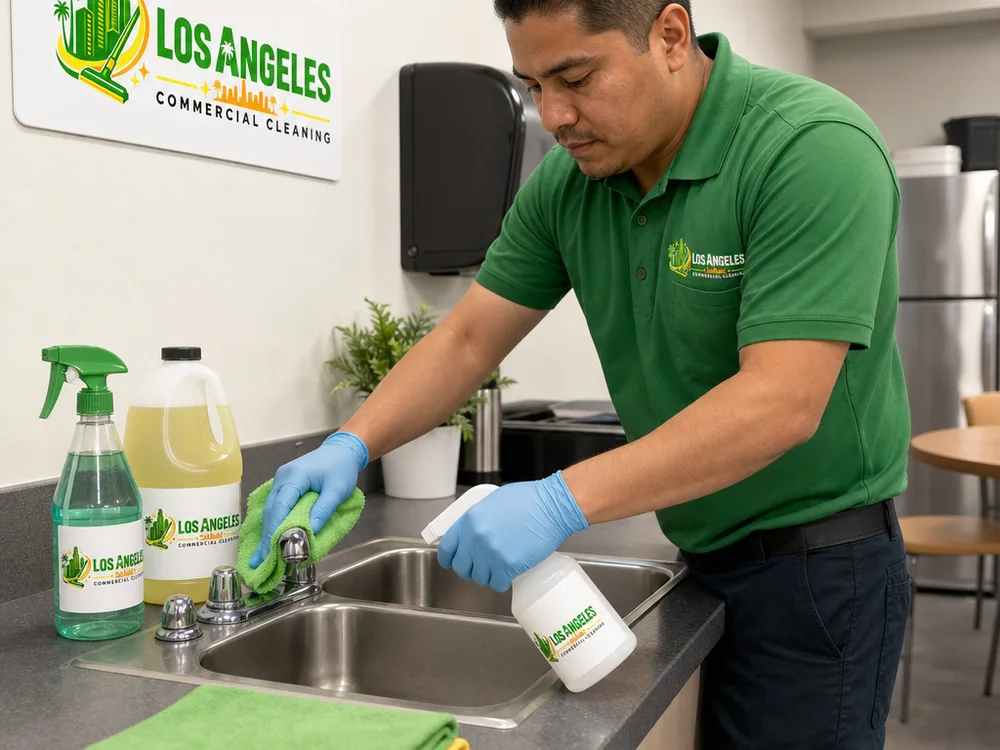
Because every facility uses space differently, we walk the site and build a scope around actual traffic patterns and problem areas. Expectations are confirmed in writing before recurring service starts.
A clear service start
We review the layout, flooring, restrooms, break areas, entrances, peak times, security rules, and sensitive spaces.
You receive a scope organized by area and frequency, including per-visit, weekly, biweekly, and monthly tasks and exclusions.
If the building needs an initial catch-up, we bring it to an agreed baseline before shifting into the recurring routine.
The crew follows a consistent sequence so high-visibility areas are prioritized and the full scope is completed efficiently.
We adjust the plan when operating hours, traffic levels, or the needs of a particular area change.
Planning your budget
Most janitorial service in Los Angeles typically runs about $0.12 to $0.30 per square foot per month for routine office-style cleaning, or roughly $35 to $70 per labor hour, depending on frequency and scope. Smaller spaces with two to three visits per week often land around $450 to $1,500 per month, while larger facilities and higher-traffic sites can be $2,000 or more.
Final price depends on square footage, visit frequency, restroom count, flooring type, trash volume, consumables, access and security procedures, and whether you need periodic detail work. Exact pricing is confirmed after a walkthrough and a written scope.
Client proof
“We were tired of cleaning that looked good right after the first week and then slowly got worse. The checklist approach made a big difference, and it is easy to flag something that needs extra attention.”
“They built the scope around our actual traffic and hours instead of giving a generic bid. Restrooms and entry floors stay consistent, which is what our staff notices most.”
Local facility fit
Los Angeles is not one uniform type of facility. Different areas create different cleaning challenges, and your plan should match them.
Request a CallbackMulti-tenant buildings and shared elevators often mean more touchpoints and lobby traffic, increasing the need for attention to entry glass, elevator lobbies, and restrooms.
Offices, studios, and creative spaces frequently run late or change schedules. Flexible evening and overnight service helps avoid conflicts with productions and events.
Guest traffic and sand or grit tracked indoors can increase the need for entry mat care, vacuuming, and hard-floor detailing near doors and common walkways.
Larger footprints and parking-lot access can introduce dust and debris around entrances and roll-up doors. Separating high-traffic zones from low-use areas helps control cost.
For multiple suites or floors, the scope can be structured by zone so client-facing and staff areas receive the right priority without neglecting restroom and break-room requirements.
Common questions
Most offices do well with two to five visits per week, but the right frequency depends on restroom usage, break-room activity, and public traffic. Entrances and lobbies often need more frequent attention than private offices. We typically set a baseline schedule and add weekly and monthly detail tasks.
Yes, many facilities start with a recurring agreement that clearly defines scope and schedule without locking them into an unworkable setup. After the first few weeks, frequencies can be adjusted based on what the building actually needs.
A usable scope lists every area and assigns a frequency to each task. It also defines periodic work such as interior glass, baseboards, high dusting, and floor detailing, plus exclusions. Clear frequencies make providers easier to compare and performance easier to measure.
It depends on what you want to manage internally. We can supply day-to-day janitorial products and set agreed stocking levels for restrooms and break rooms. If you provide paper products, inventory checks and low-stock notifications can still be included.
We confirm access rules during the walkthrough and document how the crew should enter, disarm, and secure the space. For multi-tenant buildings, service is coordinated around building-management rules and elevator or service access.
Yes. An initial reset is common when a space is transitioning from another cleaner or recovering from a busy season. It targets edges, corners, interior glass, and buildup around fixtures so the recurring plan can maintain a consistent baseline.
The biggest cost drivers are frequency, restroom count and condition, floor type, traffic, trash volume, and monthly detail work. Long operating hours and heavy visitor traffic also affect labor time because service must be staged around building occupants.
Share your facility type, hours, and any problem areas. We will walk the space, write a scope you can hold us to, and propose a schedule that fits how your building runs.